This content was aggregated from local dealer data and insights provided by the USA Today Network Automotive Insights team using Google Gemini and the Vehicles For Sale Near Indianapolis marketplace writing team.
Choosing a utility ATV involves more than comparing engine size, appearance, or accessories. The transmission can change how an ATV feels to operate, particularly when you use it for property maintenance, hauling supplies, navigating uneven ground, or riding trails. For shoppers considering the 2026 Honda Foreman Rubicon around Indianapolis, understanding the available transmission configurations is an important part of choosing the right machine.
The 2026 Honda FourTrax Foreman 4x4 family includes Foreman Rubicon models with different operating arrangements depending on the specific version. Honda's Dual Clutch Transmission (DCT) is designed to provide automatic shifting, while non-DCT models feature an Electric Shift Program (ESP) or a foot-shift transmission with an automatic centrifugal clutch. The exact configuration and equipment depend on the model selected, so confirm the specifications of the ATV you are considering.
This ATV buyer's guide explains how transmission choice can affect property work, what features deserve attention, and what to ask before visiting a dealership.
The main difference between non-DCT models and Honda's Dual Clutch Transmission (DCT) is how gear changes are managed. With non-DCT models using ESP push-button shifting or a traditional foot-shift mechanism with an automatic centrifugal clutch, the rider directly selects the gear ratio. This approach may appeal to experienced ATV operators who prefer direct involvement in gear selection.
Honda's Dual Clutch Transmission is designed to shift gears automatically while allowing riders to toggle between AT (Automatic) mode and ESP (Electric Shift Program) manual push-button mode. This versatility reduces the need for frequent manual shifting while moving between different riding conditions.
Neither approach is automatically best for every owner. The better choice depends on the work you do, your riding experience, and how much control you want over gear changes.
Consider the practical differences:
Electric Shift Program (ESP) & Foot-Shift: Provide direct gear selection via push-button or foot controls with an automatic centrifugal clutch for maximum rider control.
Dual Clutch Transmission (DCT): Enables automatic gear changes with AT mode or manual control via ESP push-button mode for simplified operation across changing speeds.
Rider Preferences: Offer a choice between direct control over gear selection or the seamless convenience of automatic shifting.
Work Conditions: Determine whether frequent stops, low-speed maneuvering, or varied terrain favor push-button or automatic shifting.
Model Configuration: Vary by trim level and package, making it essential to verify the specific transmission features of each version.
During a dealership visit, ask to compare the transmission controls and operating instructions for the specific Foreman Rubicon models available. A demonstration can make the differences easier to understand than a specification sheet alone.
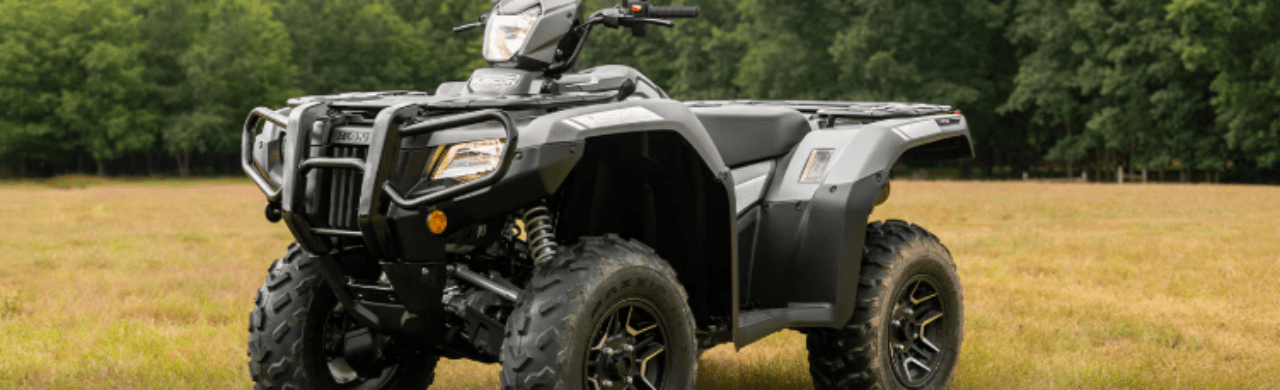
The Honda Foreman Rubicon is part of Honda's utility ATV family, intended for riders who need a machine that can serve practical tasks as well as recreational use. Its suitability depends on the exact model, equipment, terrain, and work being performed.
When comparing a 2026 Honda Foreman Rubicon, look beyond the transmission and consider the overall package. Four-wheel-drive capability, steering assistance, suspension, tires, controls, and cargo arrangements can all affect how an ATV performs in everyday use. Equipment can vary by trim, so do not assume every version includes the same features.
Important areas to review include:
Four-wheel-drive system: Ask how the system is engaged and what operating guidance applies to different surfaces.
Power steering: If equipped, evaluate how the steering assistance feels during slow turns and maneuvering.
Transmission controls: Understand the gear selector, available modes, and recommended operating procedures.
Suspension and tires: Consider whether the setup suits the surfaces and loads you expect to encounter.
Racks and carrying capacity: Review the owner's specifications and determine whether the carrying arrangements suit your typical tasks.
Controls and ergonomics: Check handlebar reach, seat position, foot placement, and access to switches.
Protection and accessories: Ask which guards, racks, or other accessories are factory equipment and which are optional.
The goal is to evaluate the ATV as a complete work and recreational machine, not to select a transmission in isolation.
For property work, the best ATV is one that matches the jobs you actually perform. Maintaining acreage, checking fence lines, moving tools, and navigating uneven ground can place different demands on a machine. A transmission that feels convenient during one task may not be the deciding factor for another.
If your work involves frequent changes in speed or repeated stops, an automatic DCT configuration may be worth considering. Riders who prefer to choose gears themselves may favor a manual arrangement. Either way, learn the operating procedures and use the gear range recommended for the task.
Before choosing, think about:
Terrain: Will you mainly travel across grass, gravel, wooded paths, mud, or uneven ground?
Typical loads: What tools or supplies do you expect to carry, and are they within the manufacturer's stated limits?
Maneuvering: Will you often work around buildings, trees, gates, or tight spaces?
Riding experience: Are you comfortable operating a manual ATV, or would automatic shifting feel more straightforward?
Frequency of use: Will the machine be used occasionally or as part of a regular property-maintenance routine?
Accessories: Do you need compatible racks, storage, guards, or task-specific equipment?
Never exceed the manufacturer's load limits or use an ATV for tasks outside its intended operating guidance. Ask the dealer which accessories are compatible with the exact model and whether installation affects any warranty terms.
A utility ATV is not a road-going vehicle, so think about where and how you will use it before purchasing. Around Indianapolis, an owner may need to consider private property, farm paths, designated riding areas, storage space, and how the ATV will be transported. Local rules can restrict where ATVs may be operated, so check applicable requirements before riding.
Indiana weather also makes storage and routine care worth considering. Mud, moisture, temperature changes, and seasonal use can affect cleaning and maintenance needs. Follow the owner's manual for service intervals, fluid checks, tire care, battery maintenance, and storage procedures.
Use this test-ride and shopping checklist:
Sit on the ATV and check whether the controls are comfortable to reach.
Ask for a demonstration of the transmission and four-wheel-drive controls.
Compare manual and DCT operation where both configurations are available.
Check how the machine turns and maneuvers at low speed in an appropriate setting.
Review the owner's manual and maintenance schedule.
Confirm the exact model, included equipment, and accessory compatibility.
Ask about warranty coverage, service support, and recommended maintenance.
Tom Wood Powersports Honda serves the Indianapolis marketplace. When discussing the 2026 Honda Foreman Rubicon, describe the jobs you expect the ATV to handle and ask which configuration best matches those needs. A clear explanation of the transmission and equipment can help you make a more informed decision.
Certain Foreman Rubicon configurations use Honda's Dual Clutch Transmission, which is designed to shift automatically in its automatic mode. Other configurations may use a manual transmission. Confirm the exact 2026 model and available equipment with the dealership before deciding.
A manual transmission requires the rider to select gears, while Honda DCT can manage gear changes automatically in its automatic mode. Depending on the configuration, DCT may also provide manual gear selection. The best option depends on rider preference and the type of work being performed.
There is no single answer for every property. DCT may suit operators who prefer automatic shifting during changing work conditions, while a manual transmission may appeal to riders who want direct gear control. Compare both systems and consider your terrain, tasks, and experience.
The Foreman Rubicon is a utility ATV that may suit a range of appropriate off-road activities. Its suitability depends on the specific model, terrain, load, accessories, and operating conditions. Follow Honda's guidance and check local rules for permitted riding areas.
Ask which transmission the specific ATV has, how its controls work, what equipment is included, and which accessories are compatible. Also review the owner's manual, maintenance schedule, warranty coverage, and any operating limits that apply to your intended tasks.
Written for https://vehiclesforsalenearindianapolis.com
By the USA TODAY Network Automotive Insights Team, in collaboration with Tom Wood Honda Powersports and the Vehicles For Sale Near Indianapolis Star Edition.
Disclaimer: This article's content is intended for informational purposes only. Vehicle specifications and features are based on data provided by J.D. Power and local dealerships and may vary by individual vehicle, VIN, trim, configuration, packages, and optional equipment. Vehicle images may not depict the exact model, trim, features, packages, accessories, or specifications described. Vehicle pricing, availability, features, and specifications are subject to change without notice. Please reference the dealership's vehicle listing and window sticker or consult the dealership directly for complete and accurate details.